From Crisis to Cautious Optimism: Understanding The Decline of Opioid Overdose Rates
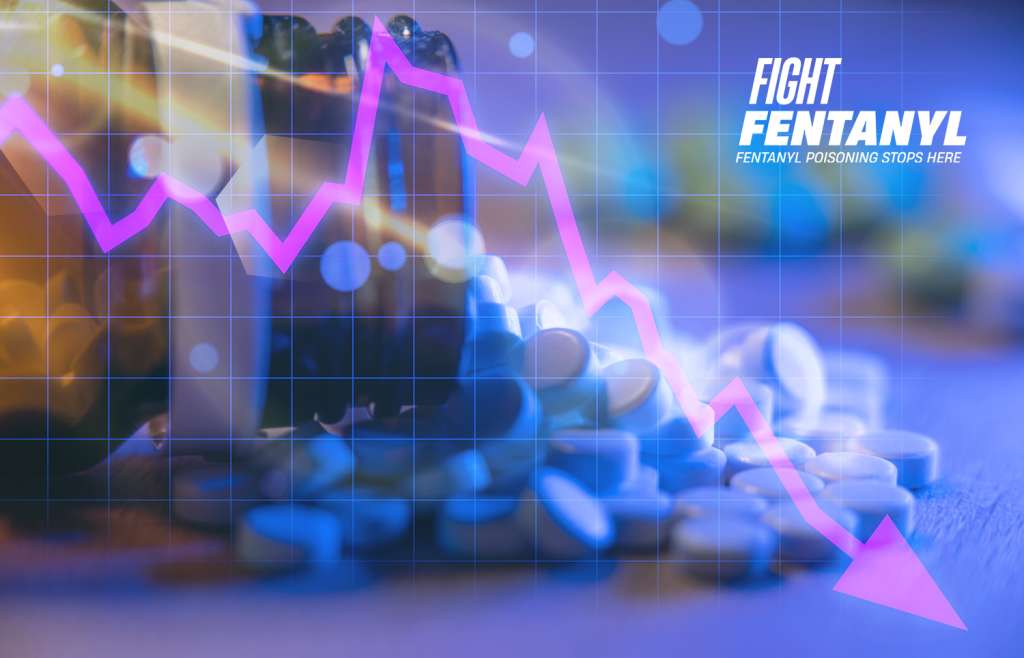
After decades of devastation caused by opioids, we are finally seeing downward trends in annual rates of overdose deaths. While this trend offers cautious hope, it does not represent the conclusion of America’s battle with the opioid epidemic.
Let’s Talk Numbers
Since the onset of the opioid epidemic in the 1990s, more than one million lives have been claimed by overdoses – with over 600,000 of those being attributed to opioids alone. The opioid epidemic has unfolded in three waves: wave one began in the mid to late 1990s with the surge of prescription opioid use; wave two followed in 2010 with substantial increase in heroin-related deaths; and wave three began in 2013 with the influx of synthetic opioid related deaths including fentanyl, carfentanil, and protonitazene. In 2017, the epidemic was declared a public health emergency, meaning that a formal declaration was made because the crisis posed a significant risk of injury or death and exceeded the capacity of traditional public health systems.
In 2021, annual overdose deaths exceeded 100,000 for the first time in history. Unfortunately, that number remained above 100,000 in both 2022 and 2023 with 107,941 and 105,007 overdose deaths recorded, respectively. The vast majority of these overdose deaths, roughly 80%, involved opioids. In 2024, however, the tides began to turn. Total drug overdoses fell to just under 80,000 people, with nearly 70% involving opioids.
In Monroe County specifically, we have seen encouraging declines in overdose death rates. Between 2020 and 2022, 51.4 deaths per 100,000 people were attributed to overdose. In 2021 to 2023, that number decreased to 37.6 deaths per 100,000 people. In the most recent data, spanning 2022 to 2024, that rate declined further to 35.3 deaths per 100,000 people. The work is not yet finished, but these numbers represent a meaningful step in the right direction.
Factors Driving the Decline
The decreases in overdose rates signify the third straight year of decline in decades. This did not happen accidentally and as we collectively continue to fight the good fight, it is imperative that we name the strategies that work.
Increased Access to Naloxone
First and foremost, we have seen significantly increased access to naloxone, better known as Narcan. Naloxone is a life-saving medication that can be used to reverse the effects of an opioid overdose. Collectively, we have banded together to increase access to naloxone: it can be found for purchase in places like CVS and Walgreens, but it is also available at many government buildings, and can be ordered for free through websites like FightFentanyl and NEXT Distro. Often, the first responders to opioid overdoses are community members, friends, peers, and family of an individual. By equipping the public with naloxone, we decrease the wait time in responding to potentially fatal overdoses. It is always better to carry it and never have to use it, than to need it and not have it.
Increased Availability of Services
Another significant win in the big picture of decreasing overdose death rates has been the expansion of treatment and recovery services. Barriers still remain, but more people are able to access lifesaving care than ever before. Across the nation, access to medications for opioid use disorder (MOUD) has increased. These treatments help to reduce cravings, decrease withdrawal symptoms, and lower the risk of fatal overdose. Policy changes have allowed for increased access to these medications which result in people being able to receive MOUD sooner and in more diverse locations.
Additionally, we have begun to see changes in the “rock bottom” mindset, meaning that people are beginning to understand that an individual should not have to experience severe health complications, numerous overdoses, or legal consequences to undergo care for an opioid use disorder (OUD). This change has brought on the development of crucial interception points that allow for services to be provided throughout various stages of use and need. This idea has been integrated into the local legal system through the Law Enforcement Treatment Initiative (LETI), which outlines three key areas for intervention: community referral, pre-arrest, and post-arrest.
Another important contributor to increased service availability is the rise of community-based organizations dedicated to meeting the diverse non-clinical needs of people. Outside of traditional healthcare settings, communities have expanded programs that meet people exactly where they are. Mobile outreach teams, harm reduction organizations, and community recovery initiatives are building bridges to people who may not otherwise engage with treatment systems. They help to build trust, increase access to healthcare, obtain housing resources, and potentially enter formal treatment if needed. Organizations in Monroe County such as Northbound and Path to Peace help to fill these gaps. For a full list of resources, check out our treatment & recovery page.
Recent declines in overdose deaths suggest that expanded access to services is crucial. Sustaining and building upon this progress will require ongoing investment in evidence based treatment, recovery support systems, and accessible community services that allow for people to survive substance use and thrive in recovery.
Greater Public Awareness
Education and access only go so far. Awareness and advocacy have also been monumental in reducing overdose deaths and opioid-related harm. Through initiatives such as the Fight Fentanyl Campaign and the Dose of Reality Podcast, we have showcased faces, stories, and voices of loss, recovery, and addiction. By taking strides to decrease stigma, we subsequently decrease the barriers involved in reaching out for help. 1 in 4 Americans know someone struggling with an OUD. When we shine light on taboo topics, we realize just how many individuals are impacted. You are never alone in the fight.
Caution in Our Optimism
This battle is far from over. There are still marked concerns regarding opioids and overdose deaths. The steps that have been taken are not minimal, but we must continue to be aware of the dangers and threats that continue to exist.
Fentanyl Remains a Threat
Fentanyl began to enter the drug supply around 2013, marking the third wave of the opioid epidemic. This drug is 50 to 100 times more potent than many prescription opioids and is frequently mixed or “cut” into other substances – often unknowingly to the user. It is typically undetectable without harm reduction methods such as fentanyl test strips, as it has no distinct smell, taste, or color. It is unevenly dispersed into substances – similar to chocolate chips in cookies – meaning that one part of a pill or powder may contain lethal doses while another part of the same pill or powder may not contain any. Fentanyl has been found in many categories of street drugs including cocaine, counterfeit pills, methamphetamine, MDMA, and heroin. While various government entities try to buckle down on the production and distribution of fentanyl, it remains the leading driver of opioid-related fatalities.
The New Landscape of the Illicit Drug Supply
As organizations and entities develop new policies aimed at disrupting the drug supply in an effort to reduce overdose deaths, the landscape of the illicit drug market continues to rapidly shift. With that, we are seeing the emergence of new opioid adulterants. Some of the newest threats include veterinary sedatives such as xylazine and medetomidine, as well as emerging synthetic opioids known as nitazenes. These adulterants are typically undetectable by standard toxicology screenings, leaving clinicians and emergency responders with limited information about what a person may have ingested. Users are rarely exposed to just one substance, creating unpredictable, compounding toxicities that can require increased medical care and multiple doses of naloxone in the event of an overdose. As the supply continues to evolve, prevention, treatment, and intervention efforts must evolve just as quickly.
Populations Still at Elevated Risk
While we have seen substantial decreases in overdose deaths, this has not occurred equally throughout all populations. Older adults aged 55 and older have not seen significant decreases in overdose deaths. Additionally, racial and ethnic minorities continue to face disparities in access to formal substance use treatment, elevating their risk for fatal overdose. Low income and rural communities struggle with fewer local providers and additional barriers to accessing care and resources. This does not diminish the work that has been done, it only recognizes that efforts must continue. Progress is encouraging, but it must be shared by all communities if we hope to achieve lasting change.
What Success Looks Like
Success is not simply fewer deaths being attributed to opioids or overdoses in general. Success is broad, it is long-lasting, it is empowering, and it must suit the individual who we are trying to help. We must remember that one size does not in fact fit all, nor does one method of recovery work for every person. Success is allowing for individuals to be in the driver’s seat of their recovery through decisions that fulfill their personal needs and wishes. Success is an improved quality of life through increased health, better overall wellbeing, access to livable wages and affordable housing. Success is building upon family and community support through the continued development of tools that grant access to a plethora of resources that drive connection. Success is marked by prevention efforts that reach people before substances ever have the chance to take hold. Success is not just in keeping people alive for today; it is creating the conditions for them to build healthy, meaningful, and lasting futures tomorrow.
One Life Lost is One Too Many
Any effort made to reduce overdose makes a difference. Learn the signs of an overdose, carry naloxone, support recovery-friendly initiatives, and reduce stigma through daily conversations. The decline in opioid overdose deaths is a meaningful and hard-won victory. Yet, every overdose death remains one too many. The progress we celebrate today must fuel our commitment to prevention, treatment, recovery support, and compassion because every life saved represents a family preserved, a future reclaimed, and a community strengthened.